We asked our denim experts for their top tips to keep your favorite jeans looking like new. Follow these simple care suggestions to get the most out of your denim.
Environmentally-friendly tips are marked in green.
To prevent dark dyes from bleeding, wash your jeans before wearing them. Add 1/2 cup of white vinegar to the water during the first wash to set the dye.
Everyday Care:
Wash your jeans only once or twice a month - as infrequently as possible. Use a mild soap and a damp cloth or a toothbrush to remove small stains. Machine wash cold with a detergent formulated for cold temperatures for best results.
Drying:
Air dry flat to retain shape. Drying can shrink your jeans and warp the fabric. Only use a dryer to shrink your jeans.
If using a dryer, dry on low heat for 20 minutes maximum and then air dry the rest of the way.
Environmentally-friendly tips are marked in green.
Wearing
Hemming:
If you want to hem your jeans for the perfect fit, wash them beforehand. Denim tends to shrink length-wise and hemming before washing can lead to an unexpectedly cropped look.
Breaking In:
For that lived-in look, spray your jeans with water as you wear them around the house to get natural creases and worn-in effects.
Refresh:
To keep your denim smelling its best, rub it with a fabric sheet or spray it with fabric freshener. Simply hanging them outside will work too.
Storing
Hanging:
The best way to store denim is to hang it from the belt loops to reduce creases and wrinkles. Attach two S-hooks to a regular pants hanger and hang by the outside belt loops.
Folding:
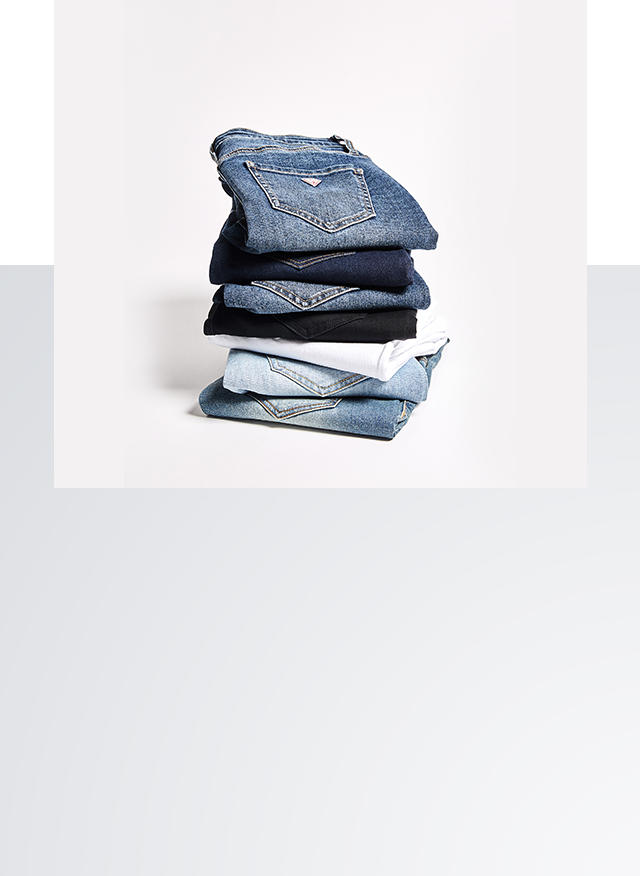
If closet space is an issue, fold your jeans into stacks like you see in GUESS stores - with the zipper inside of the fold.
General Care Guide
Washing:
Old washing machines are inefficient with both water and energy. When shopping for a new machine, look for the Energy Star certification to reduce your water and energy usage. Choose a front-facing washer, especially for washing synthetic materials (such as fleece, polyester or spandex). These garments release microscopic plastic fibers into the waterways. Top-loading machines release 6-7 times the number of the microfibers as front-facing machines.
Drying:
To be as environmentally-friendly as possible, skip the dryer completely and use a clothesline or drying rack instead.
Delicates:
Certain fabrics such as wool, lace, cashmere or silk may need to be hand washed.
Vervollständige dein KontoUnd mache dich bereit für den Zugang zu exklusiven Vorteilen und Promotionen











 Washing
 Wearing
 Storing
 General Care